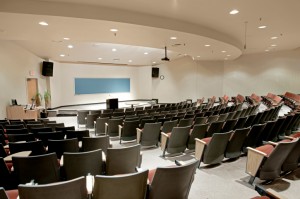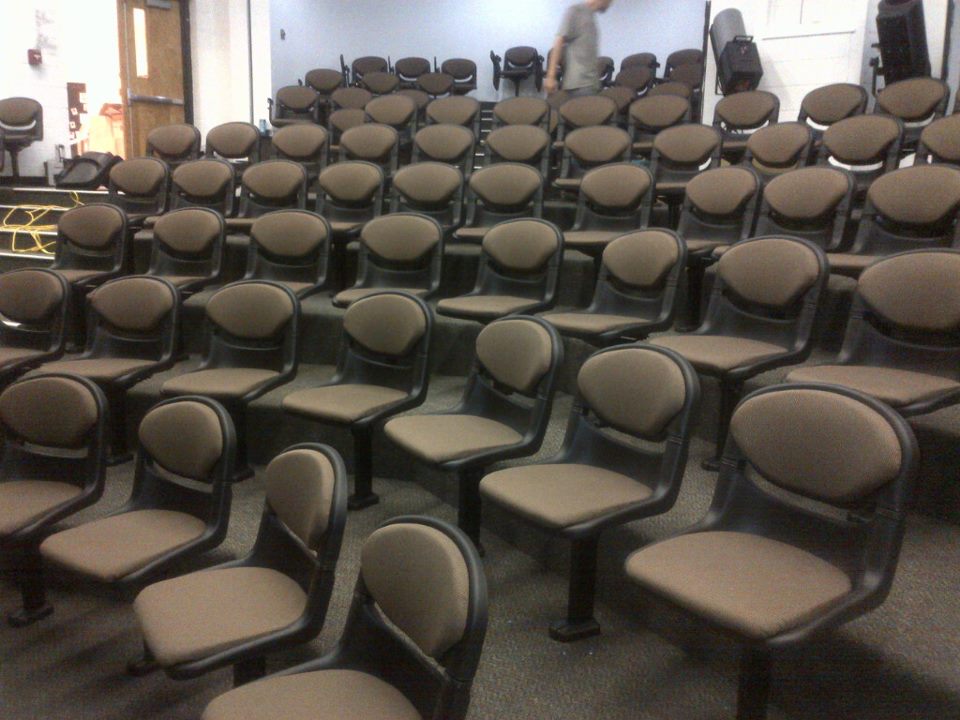
If you own or manage a business that requires employee input through presentations, you know the importance of making the presentation room one of the highest priorities. This is where knowledge is transferred the most effectively, and it’s a great opportunity to show your dedication to the business. However, some presentation rooms fall into the “office trap,” causing them to look boring and drab. Here’s why having excellent, high-quality presentation room seating can help your space.

Professionalism Matters

One great reason to have good presentation room seating is to demonstrate how professional your room is and how seriously you take everyone’s input. Having attractive and well-made furniture to seat viewers speaks volumes about your business or space. It tells anyone viewing that you are willing to make a good investment into helping the presenter succeed, and it says that you take the comfort and well-being of everyone seriously, which generally increases morale and makes a benign incentive for people to put effort into their work.

So Does Comfort

In your efforts to make the space more professional, though, don’t overlook the comfort of your employees. Adequate seating can mean the difference between learning and ignoring for your employees. Adding features like the right chairs, tablet arms or tabletops, and more can help your employees make the most out of every presentation.

Don’t Forget Aesthetics

If you pick the right designs, it can complement your room, making it visually attractive. Presentation seating doesn’t have to mean a big contrast to the overall feel of your office. Instead, selecting the perfect design can stimulate the senses and add to the presentation, and with the right mix of art and comfort, your space will truly come alive.

If you need help picking out presentation room seating, don’t hesitate to contact Carroll Seating. We’ll pair you with a project manager who can not only help you choose the right seating for your space, but also walk you through the entire project step by step. Contact us today to learn more.
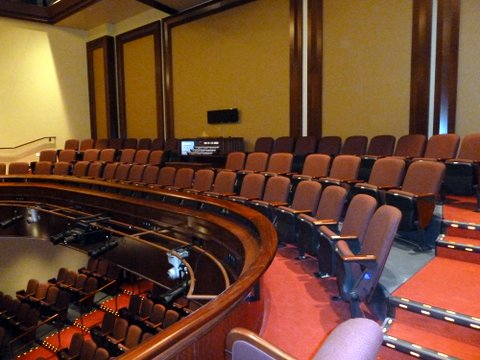


With hundreds of students entering the classroom this fall, ensuring your learning facilities are adequate to meet their needs is nothing short of a must. While many schools think about the technology students need most to succeed, several overlook the importance of the basics, like comfortable lecture hall seating.

Does It Even Matter?

A chair is a chair is a chair, right? Not quite when it comes to building a productive learning environment. Studies have repeatedly shown that people learn better in comfortable environments, and if you’re selecting something that is about as comfortable as a rock, you’re going to have nearly that level of success in the classroom. The last thing instructors want is students to be concerned about their seating, and providing better options mean they’ll never have to give it a second thought as they move this way or that in their seats working to take notes and pay attention in class.

Are There Any Real Options Out There?

If you haven’t shopped for lecture hall seating recently, you may not even know that there are several options available to meet the needs of your students. Take a look at a few.

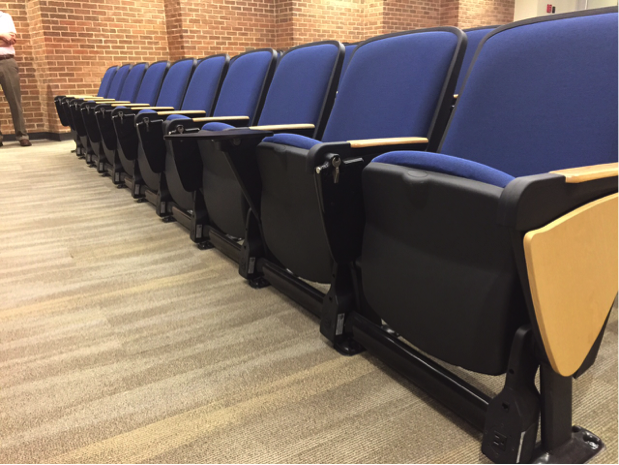
  • Swing Away Seating: Almost the ideal choice for every single lecture hall, swing away seats are easy to maintain and offer any space a streamlines look that’s perfect. Because they’re mounted above the floor, the space is easy to maintain, and you can add options like foam seat covers and more for student comfort.
  • Beam Seating: Whether you’re searching for radius or straight configurations, fixed beam seating is perfect when you want to maximize the seating space you have on hand. Nothing ever ends up out of place or in the way when you’re talking about fixed beams, and you can even go with additional comfort options like contour foam seats.
  • Single Pedestal Seating: When you want fixed seating, but you need a bit of individuality, this is a great choice. It gives you more functional space planning, as well as a solid level of comfort.
  • Multi-Purpose Seating: Perhaps the most flexible choice of all, multi-purpose seating allows you the opportunity to choose from a number of different seating options, but you can move all of it out of the space should you need it for other things. From traditional stacking chair designs that incorporate ergonomic comfort to stylish modern choices that add real character to your classroom, you might be surprised at the number of available options in this category.

Ready to get started? Contact us today for more information. We’ll help you come up with the ideal lecture hall seating to meet your needs.

Some of the most often forgotten spaces in any institution of learning whether it’s a teaching hospital, a university or a corporate event center.  Lecture halls can lean towards the utilitarian, industrial look and that’s not what attracts people.  If your lecture halls have this look, it may be time for a little remodeling.

lecturehall1The basic, traditional design of a lecture hall comes from a very different time.  In the early days of education and training, the model was a little different.  The focus was entirely set on the presenter.  Perhaps he’d illustrate his points on a blackboard or have a visual aid on a work surface behind him, but the lecturer was where all eyes fell.

At this time, students we passive receivers of the information he had to impart so all they really needed was a seat and a writing surface.  Most of the seats were notably uncomfortable and the surfaces were often awkward.  Think about those little fold up, comma-shaped “desks” you may have once used in school.  They were a nightmare for left-handers and had little room even for right-handed folks.  Now imagine trying to navigate one of those while using a laptop or computer table and keyboard.  They have not improved with time!

The models for effective learning have changed and so has the furniture.  Social learning, where interaction and group thinking are valued, is now the model.  Instruction and learning opportunities are available in more places that just colleges and universities now as well.  Many corporations have on-site lecture halls for training and presentations, too.

It’s not just the teaching methods that have evolved.  Students and technology have undergone their own alterations as well.  Students are looking for learning opportunities that are a better fit for their own personal learning style.  They aren’t often taking notes with pen and paper anymore.  Students integrate technology into their learning and they need a proper surface to hold their devices, not a folding armrest.

To serve these need needs, your lecture hall furnishings may need an update.  For more interactive learning, try chairs that swivel 360 degrees.  They remain fixed for convenience but allow for movement at the same time.  Swing-away seating is a perfect solution.

Serve the technological crowd by adding power to the table tops.  Students or employees can plug in and not worry about their battery life ending before their class does.  Add modesty screens to the table fronts or leave them sleek and open.  The choice is yours.

Learning is taking new forms every day.  Make sure your learning spaces are staying current.v

Lecture halls across campus are a reflection of the college or university’s image, so they have to look great. The last thing you want is a group of potential freshmen to peek inside a lecture hall with a poor seating structure and frustratingly outdated learning environment. The key to a good lecture hall is careful planning.

Theatre Style Concerns

Lecture-Hall-Seating-Carroll-Seating

If your lecture halls have the classic theatre style, you want performance space for your professors or lecturers along with comfortable audience seating. Along with that, you probably want a sophisticated look and good acoustical performance. Your best bet in those situations is to go with comfortable seating, probably plush or cushioned, along with acoustical seat pans. You may also want to add aisle lights for safety.

If, instead, you have a combined use space on your hands, you want both performances and instructional lectures to work in the area. Naturally, optimal seating capacity is going to be a key concern, but so are the sightlines for audience members. In cases like these, you probably don’t want tables, but oversized table arms, as that will not only accommodate those taking notes, but also those using laptops too. Power access will be critical in a facility like this, and you may want to go with multiple space seating options for best results.

Make It ADA Compliant

As you plan out your space, it’s essential to keep ADA requirements in mind. At least five percent of your seating area has to meet ADA guidelines. These rules also state that no less than one seating unit must meet those guidelines. Within those compliant seating areas, you need a clear space of 30” x 48” for wheelchair access. You also need knee clearance of 27” high, 30” in width, and 19” in depth. The height of the work surface (if you have one) needs to be 28” to 34”. Additionally, no less than one unit or one percent of your seating area has to be armless or have removable arms on the aisle side. Fortunately, these guidelines are pretty easily addressed, as many seating choices on the market today have either swing arms or removable units.

There was a time when designing a lecture hall meant simply finding enough seats to fit in the room so students could passively listen to the professor, take notes, and occasionally look up at a visual aid. That time is long since gone thanks to today’s diverse learning and teaching styles. Designing the perfect lecture hall seating today takes some intuition and thought. Here are a few tips that might be helpful.
lecture hall seating, Carroll Seating
Keep the Classroom Style in Mind. You could go with a traditional classroom style, with the instructor at the front of the room and rows of seating moving back from that. You could also go with a banquet round style if you want students to interact with each other more than they focus on the presenter at the front. Another option is to go with theatre style seating, but like classroom style, you’re not going to get much interaction between presenters and students. The key here is to think about how much interaction is needed. In a lab-style class, it’s probably quite a bit. In a more traditional lecture presentation, the chances are good that it’s not much. Options like swivel or moveable seating can help out in this arena too.

Check the Fire Regulations. Your local fire regulations will tell you how many people you can place in each row as well as how many rows can go in each section, so take a look at that even before you contact your local seating company. In most cases, this number is around 20 people per row.

Think About Entrances and Exits. People are going to come and go from the lecture hall late. It’s just one of those things that happens. What’s more, though, is that it can be a real interrupter at times. If you make certain your seating is set up so the entrances and exits are near the back of your seating area, or at least off to the side, someone can slip in almost unnoticed without a problem.

Don’t Forget Obstructions. Support posts, speaker mounts, and more can create real obstructions for students in the room. Factor that in as you design the perfect seating.

Great lecture hall seating isn’t too difficult to achieve. Just make sure you factor in all of the aspects before you select seating that works for you.

0
    0
    Your Cart
    Your cart is emptyReturn to Shop